
Geauga County Arrest Reports
Start with the sheriff. The Geauga County Sheriff's Office posts no countywide booking blotter. No 72-hour feed, weekly roster, or monthly arrest list appears anywhere on its public site. The site lists corrections and records contacts only. The strongest official substitute is the Middlefield Police blotter archive. Its dated entries cover village incidents. Many admissions to the county jail never appear there. The Maple Leaf Sheriff's Report opens a wider multi-day view. It collects calls and narratives for date ranges. Arrest stories run separately. Publication delay plus editorial choice keeps the paper from serving as a jail register.
Read Geauga Police Blotters
Read a blotter by its publisher and date first. That tells you its reach. Then walk backward through dated posts, checking any arrest claim against county and court records before you trust it.
- Open Middlefield’s official Blotters category and select the relevant dated post.
- Note the incident date and time, location, event type, agency, and any redaction.
- Search the Maple Leaf Sheriff’s Report for county calls during the same range.
- Contact GCSO Records for a booking sheet or Jail Register entry tied to a named person.
- Check Chardon Municipal Court or Geauga Common Pleas for the filed case and disposition.
That date may mark publication, not booking. Some narratives end with no arrest. For a same-day custody question in Geauga County, the Geauga Arrested Today route beats waiting on the next post.
Geauga Report Entry Fields
Each local source offers different facts. Middlefield posts carry incident details and redacted names. News stories may quote agencies or court filings, while the county booking file follows Ohio's jail standard under a separate set of intake fields.
| Possible item | How to read it |
|---|---|
| Incident date and time | When the reported event occurred, not necessarily the jail admission time. |
| Location | The place tied to a call or police event; it does not establish booking. |
| Incident type or narrative | A police summary that may include charges, actions, and redactions. |
| Name | May be withheld or partial; match it carefully against official records. |
| Arresting agency | The department reporting the event, which may differ from the committing authority. |
| Charge description | An charge at that stage, subject to filing changes and court disposition. |
| Photograph | No complete official blotter photo feed was found; story images are editorial. |
A county booking record can list name and alias, commitment time, official charges, committing authority, birth date, physical descriptors, fingerprints, and court papers. Not every field goes public. A police narrative and a booking sheet answer different questions.
Geauga Weekend Posting Gaps
No official weekend booking feed exists, so GCSO publishes no weekend cadence. Middlefield posts irregularly. The Maple Leaf runs weekly or by story. A Monday item may describe an older event. A weekend arrest may never make the news at all. Anchor on the event date inside each item, then check when it was published. For a named-person answer, the Geauga County recent arrests hub lays out the official records. It also maps the court routes. A quiet weekend archive does not mean no arrests happened in Geauga County.
Geauga Arrest Report Archives
The GCSO retention schedule treats Booking Files and the cumulative Jail Register as permanent records. Incident reports are kept three years past the fiscal year's end. Those rules govern the agency's own files, not how long a web post stays searchable. A dead link does not erase the record. Request older sheriff material through GCSO Records. The County Archives and Records Enterprise preserves county materials. Court records go elsewhere, and the archive sends them to the right court. Chardon Municipal Court handles local criminal and traffic cases. Common Pleas General Division takes felonies. Old state prison records sit with Ohio archival sources, off the Geauga arrest-log path.
Middlefield Arrest Reports Differ
The official Middlefield dated blotter shows a village publication built around incidents, not jail admissions.
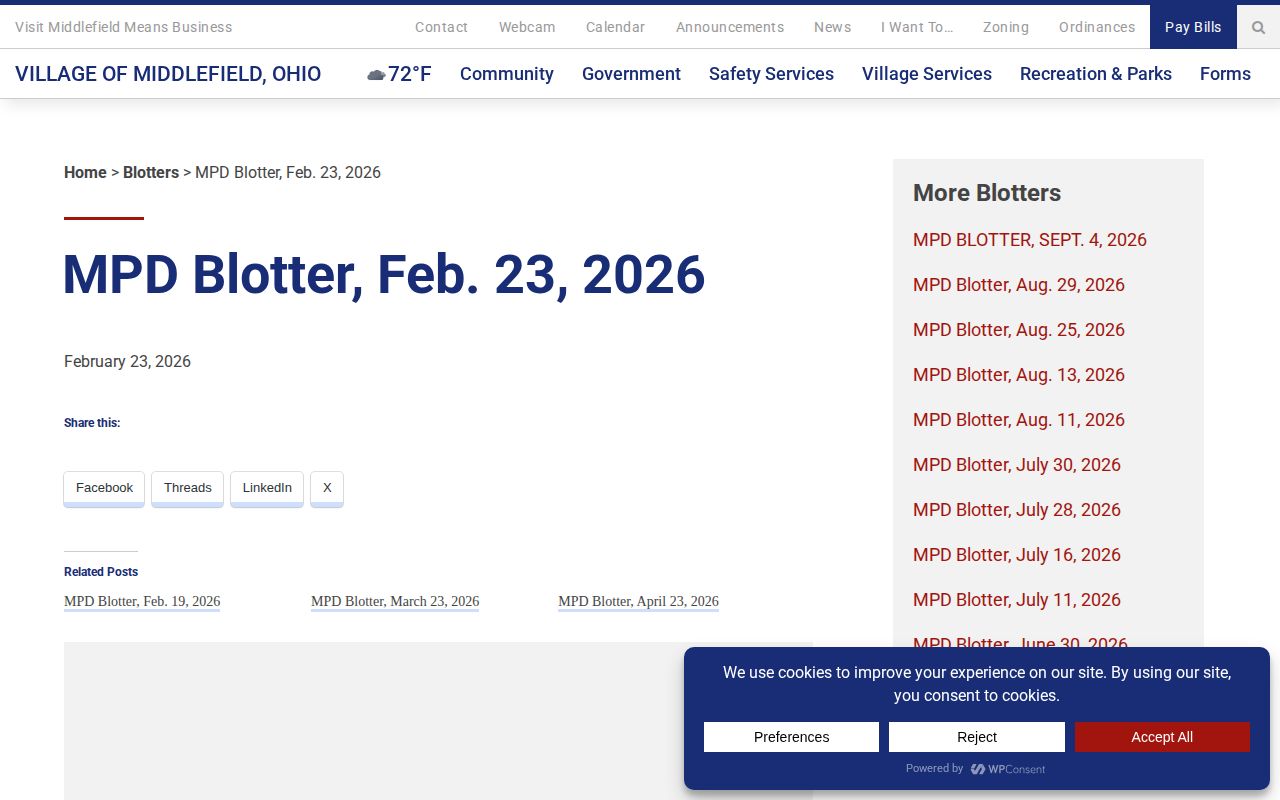
The page teaches the village format fast. It cannot stand in for all Geauga County bookings. The Middlefield blotter archive also shows the date-based category view.
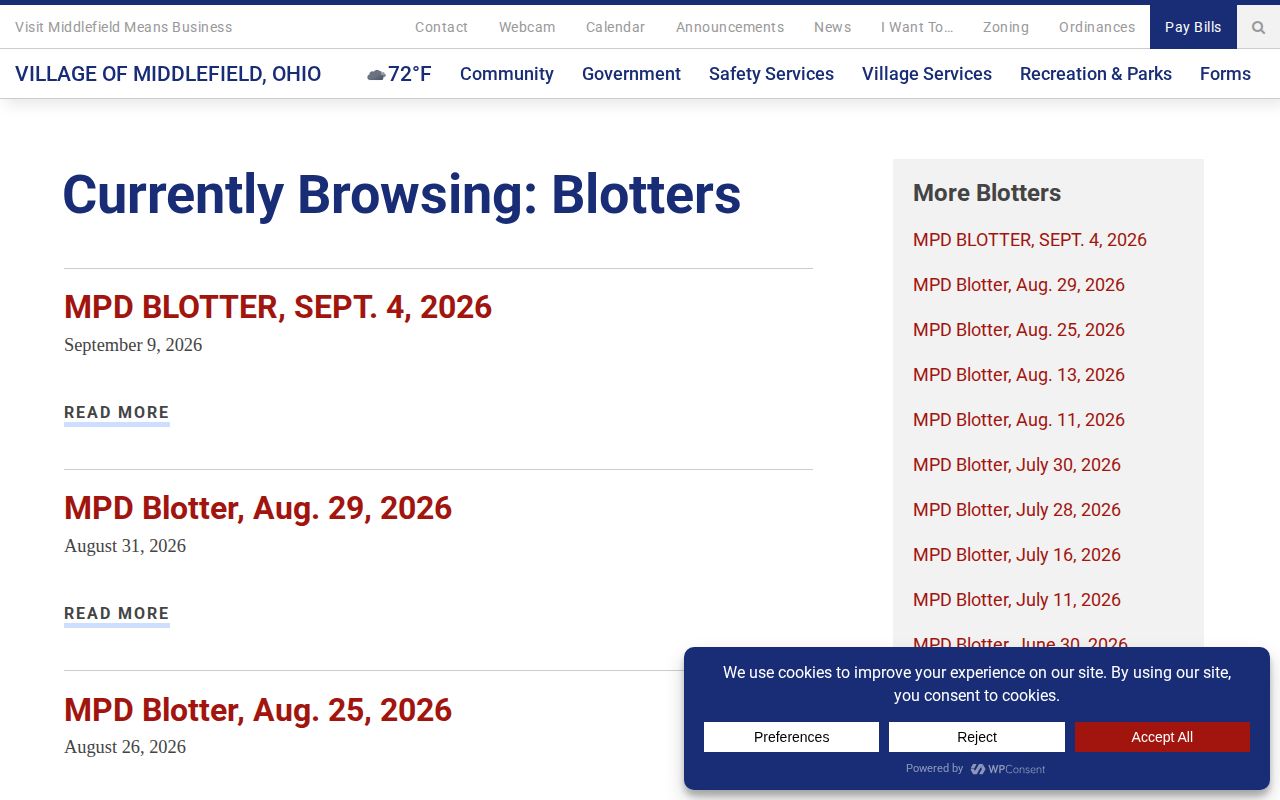
Archive dates locate reports, not a countywide arrest window.
Geauga Arrest News Coverage
The Maple Leaf is the county's strongest newspaper source. Its Sheriff's Report rounds up calls. Its news section publishes selected arrest stories from around Geauga County. One piece describes a sheriff's arrest in a garage break-in investigation, and the Maple Leaf arrest story shows that case-specific editorial approach.
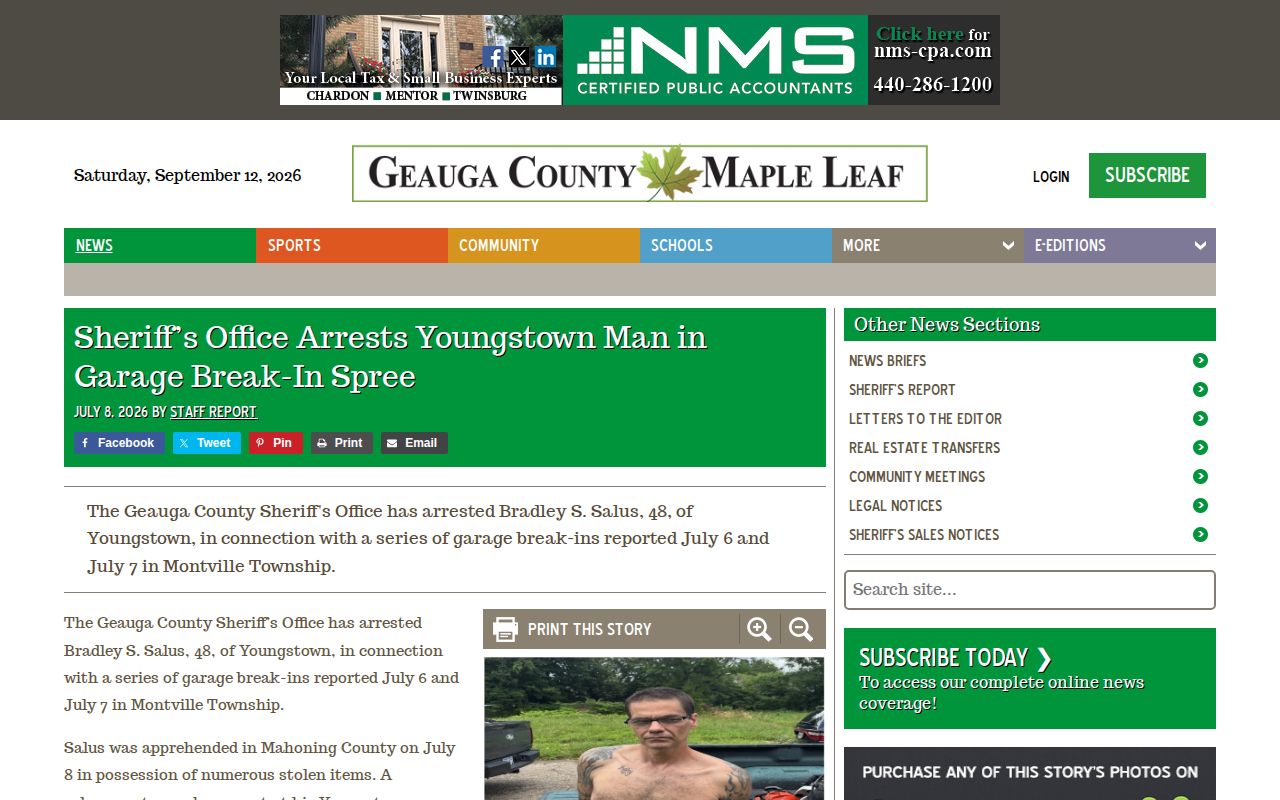
The story is local reporting, not a booking record. It covers one Geauga County case in depth.
Unofficial Geauga Booking Archives
Busted Newspaper, Recently Booked, Mugshots.com, and Arrests.org all claim Geauga sections. They come after official sources. Entries can sit stale, incomplete, or copied late, and some linger after release. Mugshots.zone lists no Geauga section. A page from another Ohio county is no substitute. A secondary listing can hand you a name or date to sharpen a records request. It cannot prove current custody or a case outcome.
Geauga Arrest Outcomes Need Courts
Booked charges can be amended, reduced, dismissed, or resolved by plea. A blotter freezes one early account. Chardon Municipal Court takes municipal matters. Geauga Common Pleas handles felonies, and when jurisdiction is unclear, checking both beats reading one blank search as the answer.
Four dates matter in any Geauga County arrest file. The incident, the arrest, the jail commitment, and the publication. Each can land on a different day. A Maple Leaf story may run days after investigators announce a case, while a Middlefield blotter item may summarize a call from earlier in the week. The county Jail Register tracks booking and release. A court filing starts a timeline all its own. Sorting these dates keeps an old report from being mistaken for fresh custody in Geauga County.
Older arrest records live with the agency that made them. GCSO Records handles sheriff incident and booking material. Middlefield Police keeps its own blotter and police records. The municipal and Common Pleas clerks each hold their court's case files. CARE can route historical county material, though its own guidance sends court requests to the responsible court. Each of these sources plays a narrower and more reliable role than a broad web search ever can.
Publication is one thing. Preservation is another. The permanent GCSO Booking Files series holds booking sheets, criminal history, copies of court papers, inmate records, and fingerprint scans. The permanent Jail Register is cumulative. None of that guarantees a booking photograph sits in that same series or is open to inspection. Ask Records about the image itself, its format, and any redaction. Never substitute an unofficial photo when Geauga County has not supplied one.
When requesting an older entry, give GCSO Records the closest known incident, arrest, booking, or release date. Say which event that date describes. Police, jail, and court records run on different clocks. Offering both dates helps staff avoid a false match between a jail record and a court file. Finally, keep the source label attached. A label like "Middlefield Police blotter," "Maple Leaf Sheriff's Report," "GCSO booking record," or "court docket" tells the reader exactly what the item shows. It also exposes its limits. A newspaper story, after all, is not a full roster.